
 Image 1 of 1
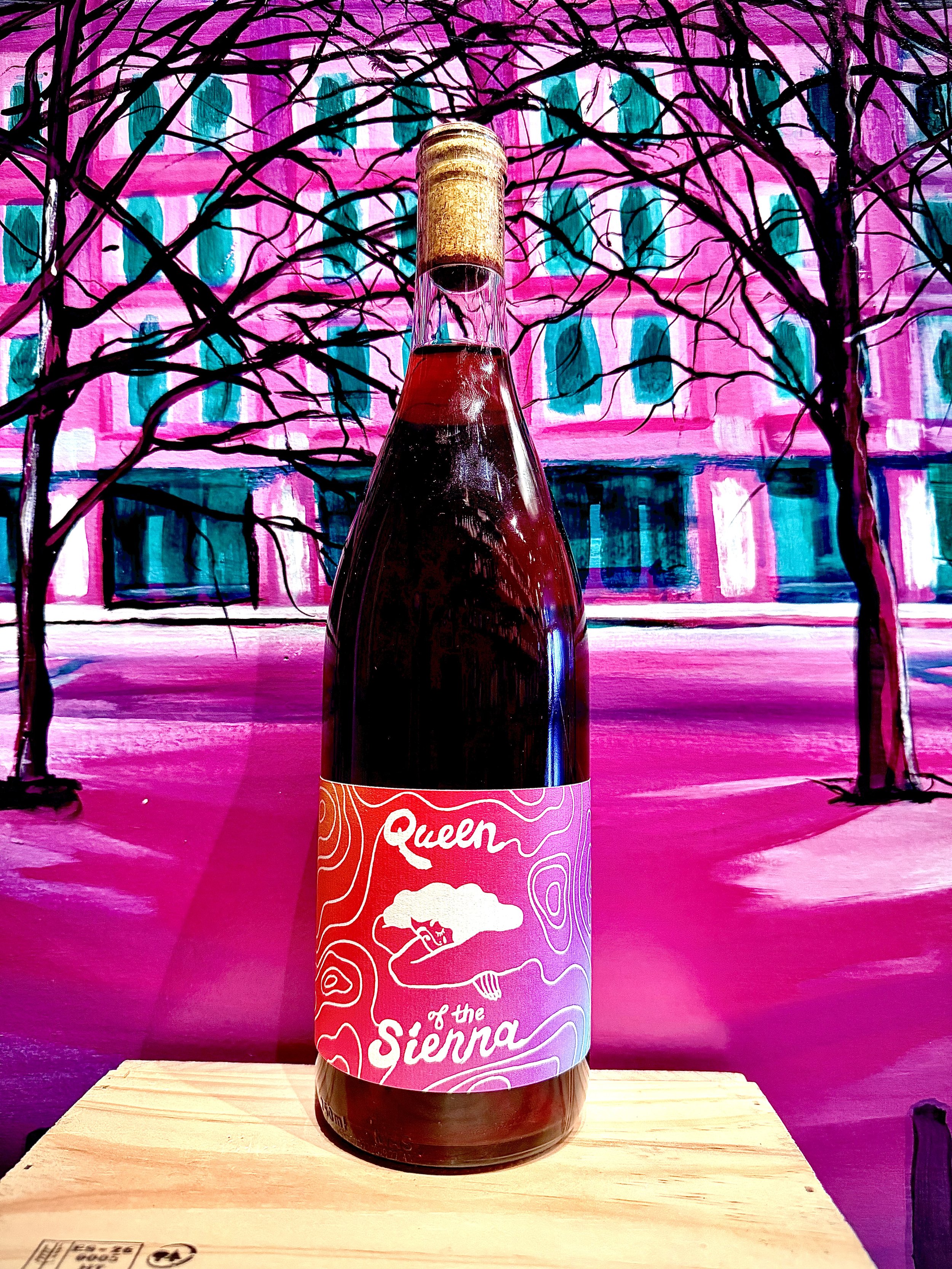
Forlorn Hope 'Queen of the Sierra Co-Ferment' Calaveras County
Forlorn Hope 'Queen of the Sierra Co-Ferment' Calaveras County
Grapes — Albariño, Tempranillo, Barbera, Vermentino, Chenin Blanc, Pineau d'Aunis, Trousseau, Chardonnay, Zinfandel, Verdelho (co-fermented in pairs)
Region — Rorick Heritage Vineyard, Calaveras County, Sierra Foothills, California
Tasting Notes — Candied strawberry and strawberry blossom on the nose, with salty rocks, limeade, a whisper of mushroomy cave air, and the kind of aromatic exuberance that stops you mid-pour. The palate is aromatically vivid, tart, and electric — rich and viscous in texture, with bracing acidity, the tannic grip of a light red, and all the aromatic complexity of a skin-contact white. It sits in the territory between red, white, and rosé without belonging to any of them. Eminently chillable. Deeply alive. Completely singular.
The Wine — The Queen of the Sierra Co-Ferment is the most intellectually playful wine in the Forlorn Hope lineup — a question asked and answered simultaneously: what happens when you pick red and white varieties together and put them in the fermenter at the same time? The answer, it turns out, is a wine that stands in the ground between all three colors, with lighter tannins than a conventional red, more depth and complexity than a rosé, and all the saline mineral character that the limestone soils of Rorick Heritage Vineyard leave on every wine they produce. The concept came naturally: at elevation on the Sierra Foothills, harvest timing is the clock, and varieties from similar historical origins happened to ripen together in the same windows. Albariño and Tempranillo hit together — both Iberian. Barbera and Vermentino — both Italian. Chenin Blanc and Pineau d'Aunis — both Loire. Trousseau and Chardonnay — both Jura. Zinfandel and Verdelho — both longtime Californians by the 1880s. The earth was making the blending decisions all along.
Farming — Certified organic across all 75 acres of Rorick Heritage Vineyard. The property sits at 2,000 feet elevation in Calaveras County on a rare combination of schist over dolomite-rich limestone — one of the most distinctive soil profiles in all of California — first ranched by the Shaw family in 1844, planted to vines in the 1960s and 70s, and purchased by Matthew Rorick in 2013 when he completed its conversion to organic farming.
Winemaking — Each pair of varieties was picked together and co-fermented together in the same open vessel using native yeasts. Pressed at varying stages — from halfway dry to fully dry — depending on tannin grip and taste at the time. Transferred to neutral 227L barriques or blended into stainless steel. Bottled unfined and unfiltered. As with every Forlorn Hope wine: no cultured yeast, no ML bacteria, no water, no acid additions, no enzymes, no nutrients, no new oak. Minimal effective SO2 only.
The Producer — Matthew Rorick is a one-man operation — tending every fermentation, guiding every wine from vine to bottle himself on the limestone slopes of Rorick Heritage Vineyard in the Sierra Foothills. The name Forlorn Hope comes from the Dutch verloren hoop — "lost troop" — the name given to the band of soldiers who volunteered to lead the charge directly into enemy defenses. The chance of success was always slim, but glory went to the survivors. It's an apt name for a California winemaker devoted to obscure varieties, radical non-intervention, and a region most of the wine world hasn't discovered yet. If the Queen of the Sierra Amber (also on our shelf) is Matthew's meditation on what this vineyard says through its white varieties, the Co-Ferment is his most joyful experiment: what happens when you stop drawing boundaries between colors and just let the mountain decide.
Drink It With — Grilled chicken with herbs, mushroom dishes, charcuterie, aged mountain cheese, a long hike, or slightly chilled at any occasion that deserves a wine with no category and no apologies.
Forlorn Hope 'Queen of the Sierra Co-Ferment' Calaveras County
Grapes — Albariño, Tempranillo, Barbera, Vermentino, Chenin Blanc, Pineau d'Aunis, Trousseau, Chardonnay, Zinfandel, Verdelho (co-fermented in pairs)
Region — Rorick Heritage Vineyard, Calaveras County, Sierra Foothills, California
Tasting Notes — Candied strawberry and strawberry blossom on the nose, with salty rocks, limeade, a whisper of mushroomy cave air, and the kind of aromatic exuberance that stops you mid-pour. The palate is aromatically vivid, tart, and electric — rich and viscous in texture, with bracing acidity, the tannic grip of a light red, and all the aromatic complexity of a skin-contact white. It sits in the territory between red, white, and rosé without belonging to any of them. Eminently chillable. Deeply alive. Completely singular.
The Wine — The Queen of the Sierra Co-Ferment is the most intellectually playful wine in the Forlorn Hope lineup — a question asked and answered simultaneously: what happens when you pick red and white varieties together and put them in the fermenter at the same time? The answer, it turns out, is a wine that stands in the ground between all three colors, with lighter tannins than a conventional red, more depth and complexity than a rosé, and all the saline mineral character that the limestone soils of Rorick Heritage Vineyard leave on every wine they produce. The concept came naturally: at elevation on the Sierra Foothills, harvest timing is the clock, and varieties from similar historical origins happened to ripen together in the same windows. Albariño and Tempranillo hit together — both Iberian. Barbera and Vermentino — both Italian. Chenin Blanc and Pineau d'Aunis — both Loire. Trousseau and Chardonnay — both Jura. Zinfandel and Verdelho — both longtime Californians by the 1880s. The earth was making the blending decisions all along.
Farming — Certified organic across all 75 acres of Rorick Heritage Vineyard. The property sits at 2,000 feet elevation in Calaveras County on a rare combination of schist over dolomite-rich limestone — one of the most distinctive soil profiles in all of California — first ranched by the Shaw family in 1844, planted to vines in the 1960s and 70s, and purchased by Matthew Rorick in 2013 when he completed its conversion to organic farming.
Winemaking — Each pair of varieties was picked together and co-fermented together in the same open vessel using native yeasts. Pressed at varying stages — from halfway dry to fully dry — depending on tannin grip and taste at the time. Transferred to neutral 227L barriques or blended into stainless steel. Bottled unfined and unfiltered. As with every Forlorn Hope wine: no cultured yeast, no ML bacteria, no water, no acid additions, no enzymes, no nutrients, no new oak. Minimal effective SO2 only.
The Producer — Matthew Rorick is a one-man operation — tending every fermentation, guiding every wine from vine to bottle himself on the limestone slopes of Rorick Heritage Vineyard in the Sierra Foothills. The name Forlorn Hope comes from the Dutch verloren hoop — "lost troop" — the name given to the band of soldiers who volunteered to lead the charge directly into enemy defenses. The chance of success was always slim, but glory went to the survivors. It's an apt name for a California winemaker devoted to obscure varieties, radical non-intervention, and a region most of the wine world hasn't discovered yet. If the Queen of the Sierra Amber (also on our shelf) is Matthew's meditation on what this vineyard says through its white varieties, the Co-Ferment is his most joyful experiment: what happens when you stop drawing boundaries between colors and just let the mountain decide.
Drink It With — Grilled chicken with herbs, mushroom dishes, charcuterie, aged mountain cheese, a long hike, or slightly chilled at any occasion that deserves a wine with no category and no apologies.