
 Image 1 of 1
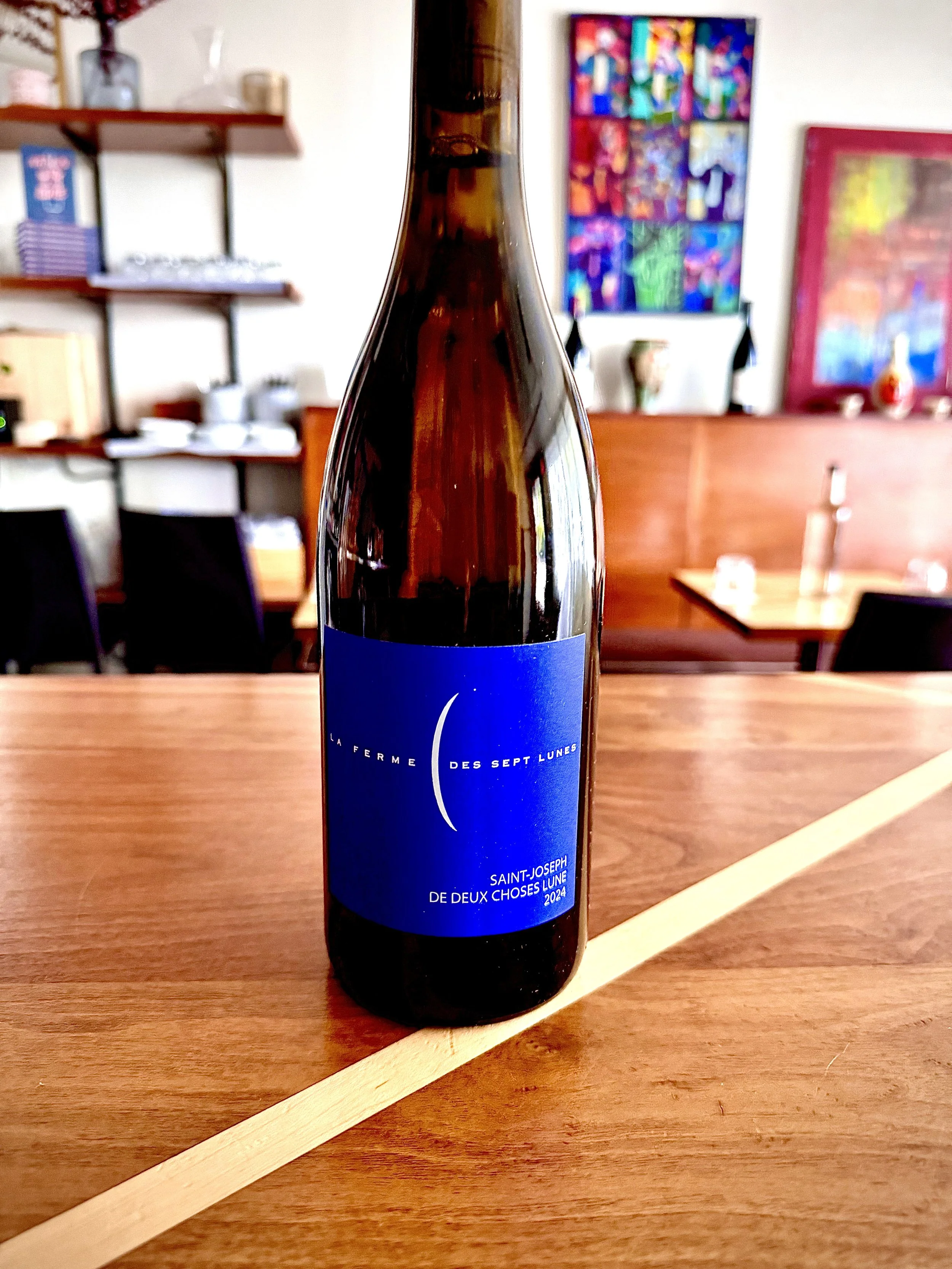
La Ferme des Sept Lunes 'De Deux Choses Lune' Saint-Joseph Blanc
La Ferme des Sept Lunes 'De Deux Choses Lune' Saint-Joseph Blanc
Grapes — 50% Marsanne, 50% Roussanne
Region — Saint-Joseph, Northern Rhône, France
Tasting Notes — Bright gold with a quiet glow. Honeysuckle, white peach, and quince on the nose, with almond, beeswax, and a wisp of woodsmoke underneath. The palate has genuine breadth and power, all broad shoulders and ripe orchard fruit, but the altitude keeps a clean streak of granite minerality running straight through the middle. Pure, intense, rich and fresh at the same time. It drinks beautifully now and will reward several years in the cellar.
The Wine — An equal blend of Marsanne and Roussanne from Jean Delobre's vineyards in Bogy, perched at 350 meters in one of the highest reaches of the Saint-Joseph appellation. Getting there involves a hairpin climb from the valley floor that visitors tend to remember vividly. The soils are silt and clay over granite, the exposure southeast, and the altitude is the whole point: as the northern Rhône's climate has drifted steadily more Mediterranean, these high, wind-exposed slopes hold onto the freshness that lower sites are losing.
Vinified and aged in barrel, with the balance between barriques and demi-muids varying by vintage. Roussanne is prone to oxidation without careful handling and benefits from measured wood contact, which is exactly what it gets here: enough to build texture and complexity, never enough to leave a mark.
The name is a pun. De deux choses l'une is a French idiom meaning roughly "it's one of two things," and swapping l'unefor Lune folds it neatly into the domaine's lunar theme. Two grapes, two things, one moon.
Farming — Certified organic since 1997 and biodynamic since well before it was common in the region. The estate is a genuine ten-hectare farm rather than a wine estate in the modern sense: Jean still grows cereals and tends fruit trees alongside the vines, keeping the polyculture tradition his family has practiced across three generations. Everything is oriented toward protecting the raw material rather than correcting it later.
Winemaking — Native yeasts exclusively. Gentle handling throughout to retain the delicate character of the fruit. Fermented and aged in used barriques and demi-muids. Neither fined nor filtered. Sulfur is the only addition, kept to what Jean calls homeopathic doses, around 20 mg/l at assemblage.
The Producer — Jean Delobre is the third generation on the same hillside farm above Bogy in the Ardèche, and for most of that history the family's grapes went to the local cooperative while the farm's real business was polyculture and table wine. Jean converted the vines to organic and biodynamic farming in 1997, then in 2001 made the decision that defined the estate: he left the cooperative and began making and bottling his own wine.
He remains a farmer as much as a vigneron, and the domaine's name, the Farm of the Seven Moons, is a fair description of how he works. His wines are among the most expressive being made in a Saint-Joseph that remains overwhelmingly classical in style, and his reds in particular have developed a devoted following among people who care about this appellation. The whites are less talked about, which is the only reason a wine of this quality is still findable at this price.
Drink It With — Roast chicken with herbs, grilled trout, mushroom risotto, aged Comté, pumpkin gratin, or duck breast with a mushroom pan sauce.
La Ferme des Sept Lunes 'De Deux Choses Lune' Saint-Joseph Blanc
Grapes — 50% Marsanne, 50% Roussanne
Region — Saint-Joseph, Northern Rhône, France
Tasting Notes — Bright gold with a quiet glow. Honeysuckle, white peach, and quince on the nose, with almond, beeswax, and a wisp of woodsmoke underneath. The palate has genuine breadth and power, all broad shoulders and ripe orchard fruit, but the altitude keeps a clean streak of granite minerality running straight through the middle. Pure, intense, rich and fresh at the same time. It drinks beautifully now and will reward several years in the cellar.
The Wine — An equal blend of Marsanne and Roussanne from Jean Delobre's vineyards in Bogy, perched at 350 meters in one of the highest reaches of the Saint-Joseph appellation. Getting there involves a hairpin climb from the valley floor that visitors tend to remember vividly. The soils are silt and clay over granite, the exposure southeast, and the altitude is the whole point: as the northern Rhône's climate has drifted steadily more Mediterranean, these high, wind-exposed slopes hold onto the freshness that lower sites are losing.
Vinified and aged in barrel, with the balance between barriques and demi-muids varying by vintage. Roussanne is prone to oxidation without careful handling and benefits from measured wood contact, which is exactly what it gets here: enough to build texture and complexity, never enough to leave a mark.
The name is a pun. De deux choses l'une is a French idiom meaning roughly "it's one of two things," and swapping l'unefor Lune folds it neatly into the domaine's lunar theme. Two grapes, two things, one moon.
Farming — Certified organic since 1997 and biodynamic since well before it was common in the region. The estate is a genuine ten-hectare farm rather than a wine estate in the modern sense: Jean still grows cereals and tends fruit trees alongside the vines, keeping the polyculture tradition his family has practiced across three generations. Everything is oriented toward protecting the raw material rather than correcting it later.
Winemaking — Native yeasts exclusively. Gentle handling throughout to retain the delicate character of the fruit. Fermented and aged in used barriques and demi-muids. Neither fined nor filtered. Sulfur is the only addition, kept to what Jean calls homeopathic doses, around 20 mg/l at assemblage.
The Producer — Jean Delobre is the third generation on the same hillside farm above Bogy in the Ardèche, and for most of that history the family's grapes went to the local cooperative while the farm's real business was polyculture and table wine. Jean converted the vines to organic and biodynamic farming in 1997, then in 2001 made the decision that defined the estate: he left the cooperative and began making and bottling his own wine.
He remains a farmer as much as a vigneron, and the domaine's name, the Farm of the Seven Moons, is a fair description of how he works. His wines are among the most expressive being made in a Saint-Joseph that remains overwhelmingly classical in style, and his reds in particular have developed a devoted following among people who care about this appellation. The whites are less talked about, which is the only reason a wine of this quality is still findable at this price.
Drink It With — Roast chicken with herbs, grilled trout, mushroom risotto, aged Comté, pumpkin gratin, or duck breast with a mushroom pan sauce.