
 Image 1 of 1
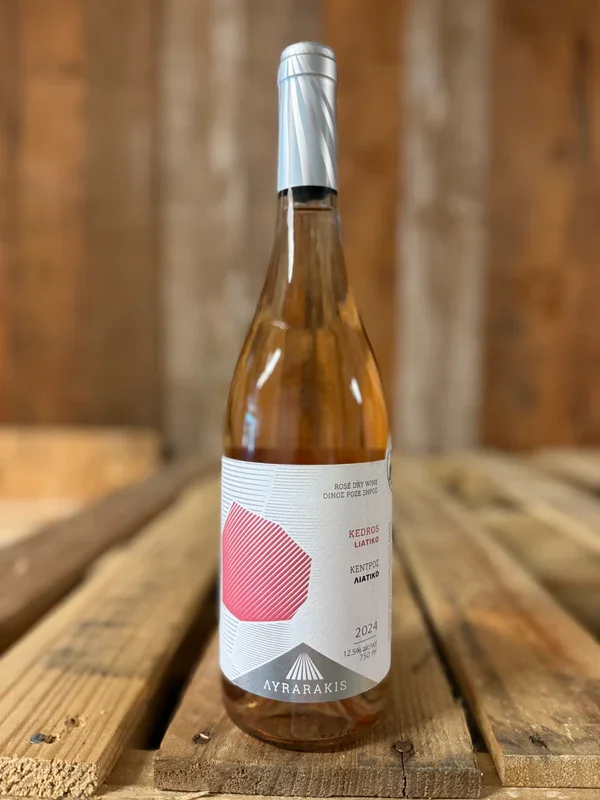
Lyrarakis 'Kedros' Liatiko Rosé
Grapes — 100% Liatiko
Region — Mt. Kedros, Rethymnon, Crete, Greece
Tasting Notes — Pale salmon in the glass, glowing with delicacy. Wild berry, raspberry, redcurrant, and a whisper of winter flowers on the nose, balanced by a chalky mineral undercurrent. The palate is the surprise — steely, precise, and long, with vibrant acidity, concentrated fruit, and a mineral-driven finish that feels more like a serious white wine than a conventional rosé. Dry, textured, and quietly extraordinary.
The Wine — 100% Liatiko from pre-phylloxera bush vines cultivated for over a century at altitudes exceeding 800 meters on Mt. Kedros in the Amari valley of Rethymnon. The low bush format — a local farming tradition — shields the fruit from the fierce winds of neighboring Mt. Psiloritis and the intensity of the Cretan sun, allowing the grapes to ripen slowly and fully under a canopy of their own foliage. These vines predate the phylloxera blight that devastated European viticulture in the 19th century and were never replanted. They are living history.
Farming — Certified organic since 2020, with a regenerative approach that goes well beyond certification. Lyrarakis has stopped ploughing entirely to protect soil microbiological life, uses only their own compost made from kitchen and winery organic waste, and works closely with their network of cooperating farmers — many of whom have also transitioned to organic practices — to evaluate performance across water, soil, pest and ecosystem management annually. The results are published publicly through their Message in a Bottle transparency project.
Winemaking — Vegan. Crafted with minimal intervention to let the extreme terroir of Mt. Kedros speak clearly. The steely, mineral character of this wine is a direct reflection of its birthplace — high altitude, ancient vines, and chalky soils do the heavy lifting.
The Producer — Lyrarakis was founded in 1966 by brothers Manolis and Sotiris Lyrarakis in Alagni, in the mountainous heart of Heraklion prefecture, Crete. Today it is run by the second generation of the family, supported by an extended team of skilled professionals. What makes Lyrarakis genuinely singular is their decades-long commitment to rescuing and reviving the rare indigenous grape varieties of Crete — a mission that has so far saved three varieties from extinction. Dafni and Plyto, now celebrated as benchmarks of Cretan winemaking, were first planted by Lyrarakis in 1992 from cuttings found in old vineyards. Their most recent rescue, Melissaki, was planted in 2010. Their portfolio now features more than eleven indigenous Cretan varieties — a living library of one of the oldest winemaking cultures on earth.
Drink It With — Grilled whole fish, shellfish, octopus with capers, fresh herbs and lemon, Cretan dakos, or anything that benefits from a wine with the delicacy of a rosé and the backbone of something much more serious.
Lyrarakis 'Kedros' Liatiko Rosé
Grapes — 100% Liatiko
Region — Mt. Kedros, Rethymnon, Crete, Greece
Tasting Notes — Pale salmon in the glass, glowing with delicacy. Wild berry, raspberry, redcurrant, and a whisper of winter flowers on the nose, balanced by a chalky mineral undercurrent. The palate is the surprise — steely, precise, and long, with vibrant acidity, concentrated fruit, and a mineral-driven finish that feels more like a serious white wine than a conventional rosé. Dry, textured, and quietly extraordinary.
The Wine — 100% Liatiko from pre-phylloxera bush vines cultivated for over a century at altitudes exceeding 800 meters on Mt. Kedros in the Amari valley of Rethymnon. The low bush format — a local farming tradition — shields the fruit from the fierce winds of neighboring Mt. Psiloritis and the intensity of the Cretan sun, allowing the grapes to ripen slowly and fully under a canopy of their own foliage. These vines predate the phylloxera blight that devastated European viticulture in the 19th century and were never replanted. They are living history.
Farming — Certified organic since 2020, with a regenerative approach that goes well beyond certification. Lyrarakis has stopped ploughing entirely to protect soil microbiological life, uses only their own compost made from kitchen and winery organic waste, and works closely with their network of cooperating farmers — many of whom have also transitioned to organic practices — to evaluate performance across water, soil, pest and ecosystem management annually. The results are published publicly through their Message in a Bottle transparency project.
Winemaking — Vegan. Crafted with minimal intervention to let the extreme terroir of Mt. Kedros speak clearly. The steely, mineral character of this wine is a direct reflection of its birthplace — high altitude, ancient vines, and chalky soils do the heavy lifting.
The Producer — Lyrarakis was founded in 1966 by brothers Manolis and Sotiris Lyrarakis in Alagni, in the mountainous heart of Heraklion prefecture, Crete. Today it is run by the second generation of the family, supported by an extended team of skilled professionals. What makes Lyrarakis genuinely singular is their decades-long commitment to rescuing and reviving the rare indigenous grape varieties of Crete — a mission that has so far saved three varieties from extinction. Dafni and Plyto, now celebrated as benchmarks of Cretan winemaking, were first planted by Lyrarakis in 1992 from cuttings found in old vineyards. Their most recent rescue, Melissaki, was planted in 2010. Their portfolio now features more than eleven indigenous Cretan varieties — a living library of one of the oldest winemaking cultures on earth.
Drink It With — Grilled whole fish, shellfish, octopus with capers, fresh herbs and lemon, Cretan dakos, or anything that benefits from a wine with the delicacy of a rosé and the backbone of something much more serious.