
 Image 1 of 1
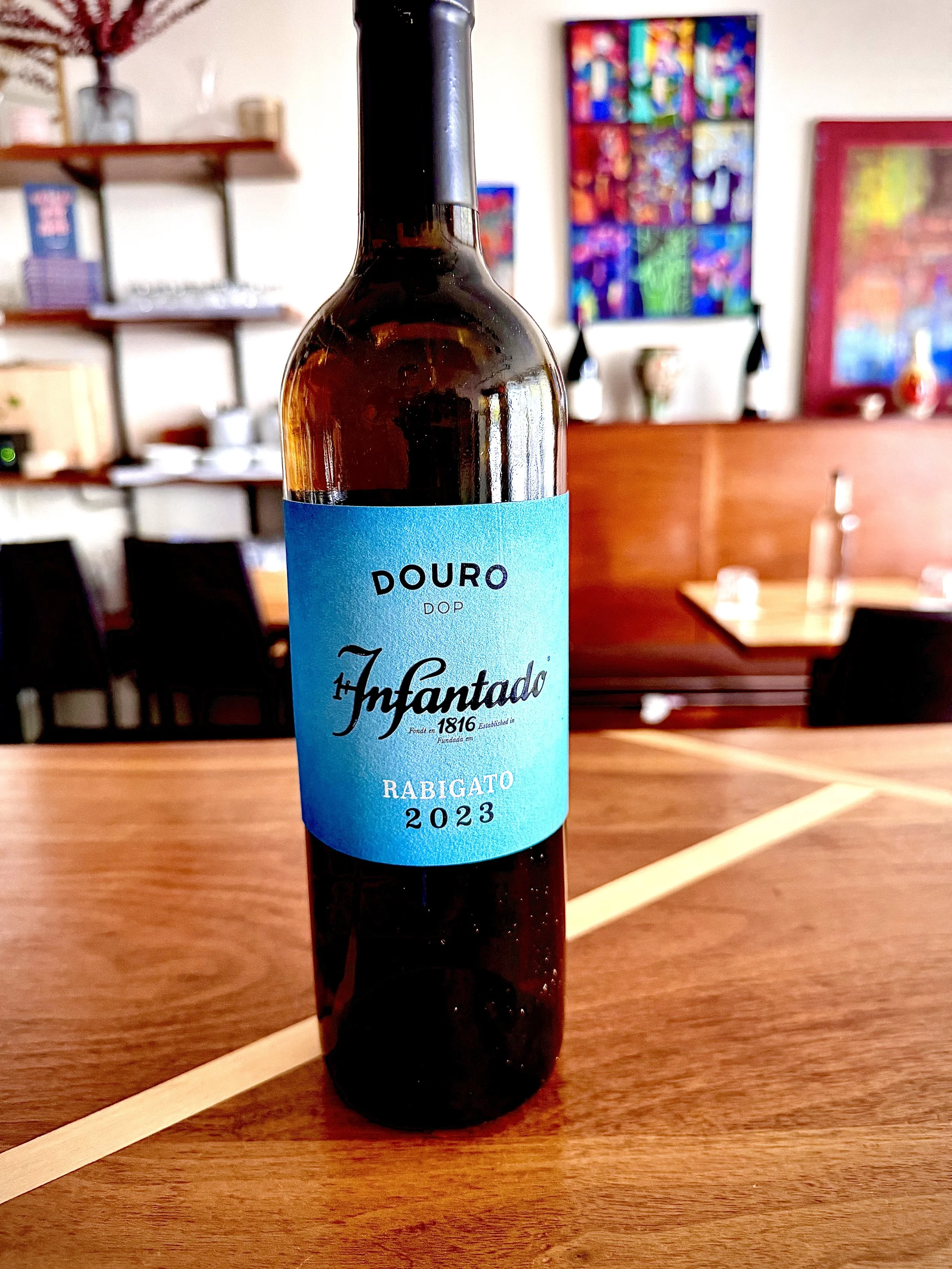
Quinta do Infantado 'Rabigato' Douro Branco
Quinta do Infantado 'Rabigato' Douro Branco
Grapes — 100% Rabigato
Region — Cima Corgo, Douro, Portugal
Tasting Notes — Pale straw with a green-gold edge. Citrus zest, white peach, and green apple on the nose, with dried herbs and a distinct wet-schist minerality underneath. The palate is taut and linear, with the searing natural acidity that makes Rabigato so prized in the Douro, rounded out by a gentle creamy texture from eleven months on fine lees. Saline and long on the finish. A serious mountain white from a region most people associate only with Port.
The Wine — 100% Rabigato from a single hectare of hillside vines planted in 2014 from massale selections, on the poor schistous soils of the Cima Corgo. Rabigato is one of the Douro's most valuable white varieties precisely because it holds its acidity in blistering heat, reaching full phenolic ripeness without ever going flabby. It has historically disappeared into blends and into white Port; bottling it on its own is a relatively new idea. The 2021 was the first commercial vintage of this wine, which makes this among the earliest expressions of what Rabigato can do as a varietal wine anywhere in the valley.
Hand harvested and destemmed, fermented in stainless steel with indigenous yeasts, then aged eleven months on its fine lees in steel. No oak at any point.
Farming — Quinta do Infantado farms 46 hectares in the Vale de Gontelho near Pinhão, all of it rated Class A, the highest vineyard classification in the Douro. Twelve hectares are certified organic, some of them among the earliest organically farmed vineyards in the entire region; the remaining 34 hectares are farmed under integrated production, described by the family as organic where possible. Over twenty indigenous Douro varieties are planted across altitudes from 150 to 350 meters.
Winemaking — Native yeast fermentation in stainless steel, eleven months on fine lees, no oak. The estate's broader winemaking is notably traditional, with the reds still fermented in stone lagares. João Roseira designed and built a machine that mimics the gentle pressure of human foot-treading, used alongside the traditional method. Fining, filtration, and sulfur levels for this cuvée are unconfirmed.
The Producer — Quinta do Infantado was established in 1816 by D. Pedro IV, heir to the Portuguese crown, which is where the name comes from: infante is Portuguese for prince. The Roseira family acquired it at the end of the nineteenth century and have run it since, farming in Covas do Douro for six generations.
Their real significance is historical. Until 1979 it was effectively forbidden for a Douro grower to bottle their own wine; everything had to be shipped downriver to the négociant houses of Vila Nova de Gaia. The Roseiras broke that convention by estate-bottling their premium wines, then spent years pushing until the law itself changed in 1986, allowing them to export directly. That single act reshaped what was possible for small growers throughout the Douro, and João Roseira has spent his career as an advocate for independent producers across Portugal. Winemaking today is led by his cousin Álvaro Roseira, who joined in 2015 and began making white wines in 2019, including a skin-fermented curtimenta. The Infantado house style runs drier and fresher than its neighbors, in Port and table wine alike, which makes a wine like this Rabigato feel like the natural conclusion of a philosophy rather than a departure from it.
Drink It With — Grilled sardines, salt cod, clams with coriander and garlic, roast chicken with lemon, fresh sheep's cheese, or anything pulled straight out of the Atlantic.
Quinta do Infantado 'Rabigato' Douro Branco
Grapes — 100% Rabigato
Region — Cima Corgo, Douro, Portugal
Tasting Notes — Pale straw with a green-gold edge. Citrus zest, white peach, and green apple on the nose, with dried herbs and a distinct wet-schist minerality underneath. The palate is taut and linear, with the searing natural acidity that makes Rabigato so prized in the Douro, rounded out by a gentle creamy texture from eleven months on fine lees. Saline and long on the finish. A serious mountain white from a region most people associate only with Port.
The Wine — 100% Rabigato from a single hectare of hillside vines planted in 2014 from massale selections, on the poor schistous soils of the Cima Corgo. Rabigato is one of the Douro's most valuable white varieties precisely because it holds its acidity in blistering heat, reaching full phenolic ripeness without ever going flabby. It has historically disappeared into blends and into white Port; bottling it on its own is a relatively new idea. The 2021 was the first commercial vintage of this wine, which makes this among the earliest expressions of what Rabigato can do as a varietal wine anywhere in the valley.
Hand harvested and destemmed, fermented in stainless steel with indigenous yeasts, then aged eleven months on its fine lees in steel. No oak at any point.
Farming — Quinta do Infantado farms 46 hectares in the Vale de Gontelho near Pinhão, all of it rated Class A, the highest vineyard classification in the Douro. Twelve hectares are certified organic, some of them among the earliest organically farmed vineyards in the entire region; the remaining 34 hectares are farmed under integrated production, described by the family as organic where possible. Over twenty indigenous Douro varieties are planted across altitudes from 150 to 350 meters.
Winemaking — Native yeast fermentation in stainless steel, eleven months on fine lees, no oak. The estate's broader winemaking is notably traditional, with the reds still fermented in stone lagares. João Roseira designed and built a machine that mimics the gentle pressure of human foot-treading, used alongside the traditional method. Fining, filtration, and sulfur levels for this cuvée are unconfirmed.
The Producer — Quinta do Infantado was established in 1816 by D. Pedro IV, heir to the Portuguese crown, which is where the name comes from: infante is Portuguese for prince. The Roseira family acquired it at the end of the nineteenth century and have run it since, farming in Covas do Douro for six generations.
Their real significance is historical. Until 1979 it was effectively forbidden for a Douro grower to bottle their own wine; everything had to be shipped downriver to the négociant houses of Vila Nova de Gaia. The Roseiras broke that convention by estate-bottling their premium wines, then spent years pushing until the law itself changed in 1986, allowing them to export directly. That single act reshaped what was possible for small growers throughout the Douro, and João Roseira has spent his career as an advocate for independent producers across Portugal. Winemaking today is led by his cousin Álvaro Roseira, who joined in 2015 and began making white wines in 2019, including a skin-fermented curtimenta. The Infantado house style runs drier and fresher than its neighbors, in Port and table wine alike, which makes a wine like this Rabigato feel like the natural conclusion of a philosophy rather than a departure from it.
Drink It With — Grilled sardines, salt cod, clams with coriander and garlic, roast chicken with lemon, fresh sheep's cheese, or anything pulled straight out of the Atlantic.