
 Image 1 of 1
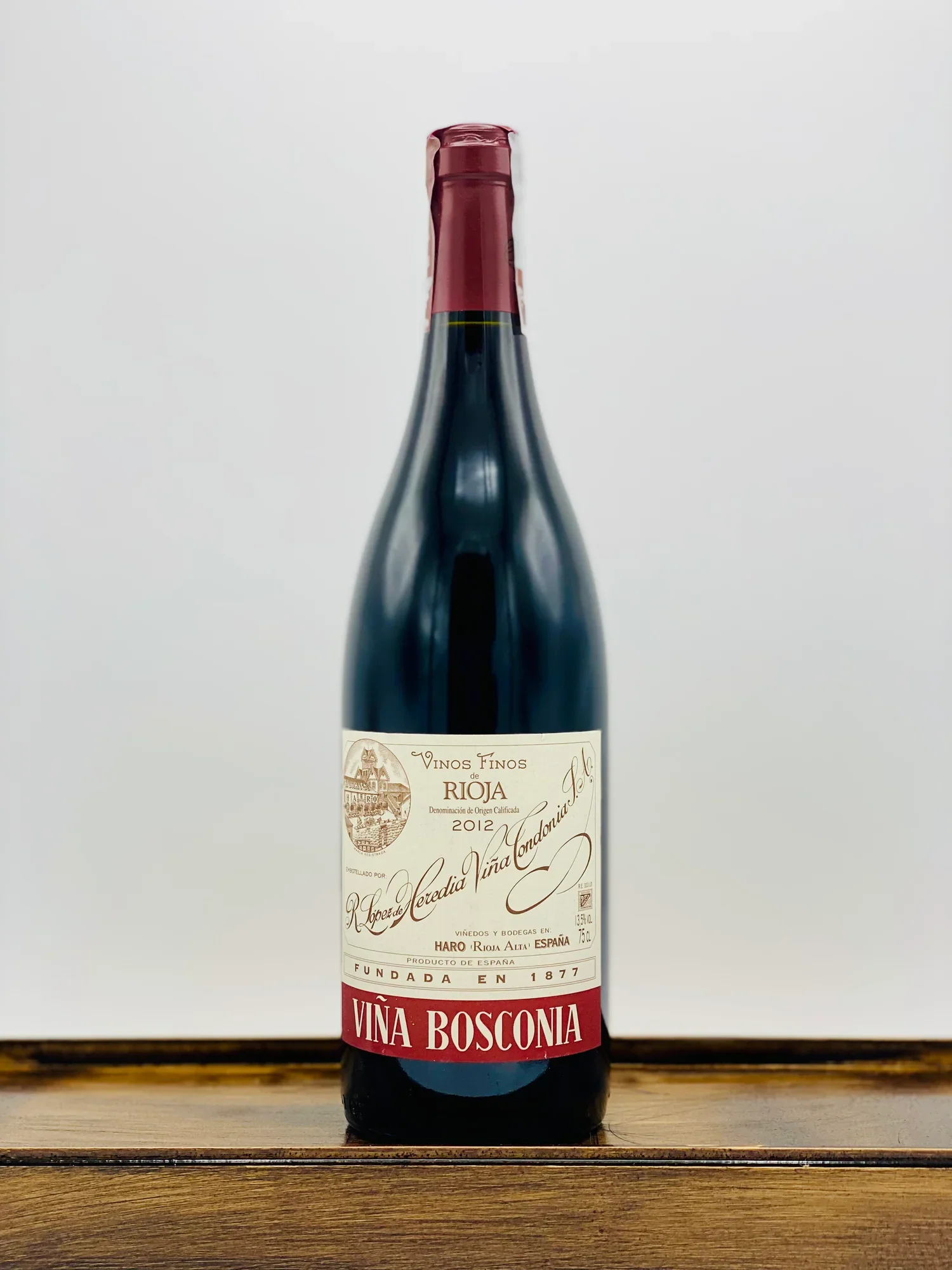
R. López de Heredia 'Viña Bosconia' Rioja Reserva
R. López de Heredia 'Viña Bosconia' Rioja Reserva
Grapes — 80% Tempranillo, 15% Garnacha, 5% Graciano and Mazuelo
Region — Rioja Alta, Haro, Spain
Tasting Notes — Deep garnet fading to a tawny rim, the color of a wine that has been given time. Dark plum, cassis, and dried cherry on the nose, layered with baking spice, singed leather, cedar, tobacco, and the coconut and vanilla signature that only comes from long years in old American oak. The palate is powerful and concentrated, with fine, resolved tannins, savory dried florals, anise, and a mineral salt edge running through the finish. Rustic in the best sense of the word, and built on a scale that Tondonia never attempts.
The Wine — From El Bosque, a fifteen hectare south-facing vineyard on clay and limestone at 465 meters, sitting beside the Ebro just outside Haro. The site was planted with Burgundy in mind, and the wine has always carried more flesh, power, and density than its more famous sibling from Viña Tondonia across the river.
Fermented in the estate's ancient oak vats, some over 150 years old, with the winery's own indigenous yeasts. Malolactic occurs spontaneously with no inoculation. The wine then spends around five years in used American oak barrels, well beyond the Reserva minimum, before further time in bottle. Nothing is released until the family judges it ready, which is often a decade or more after harvest.
Farming — All estate fruit from the family's own vineyards, roughly 170 hectares across Viña Tondonia, Viña Bosconia, Viña Cubillo, and Viña Gravonia. No synthetic pesticides, fertilizers, or herbicides, though the estate holds no organic certification. The family lets the land regenerate on its own terms: significant portions of their holdings are left fallow to rest the soil, and young vines are excluded from production entirely until the fruit reaches the standard they want. In a region where most producers buy from a network of small growers, growing every grape they use is itself a statement.
Winemaking — Wild yeast fermentation in old oak vats, spontaneous malolactic. Aged approximately five years in used American oak barrels that the estate builds itself, in cellars carved into natural sandstone that hold up to 13,000 barrels and more than ten vintages at any given time. Racked by hand. Fined with egg white in the traditional manner. Never filtered.
The Producer — Bodegas R. López de Heredia was founded in 1877, making it the oldest winery in Haro and one of the first three in all of Rioja. In nearly 150 years, remarkably little has changed. They still coop their own barrels, still ferment in vats their great-grandfather commissioned, still age everything for years longer than the law requires, and still refuse to release a wine before it is ready.
The estate is now led by María José and Mercedes López de Heredia, fourth generation, who have held the line against every modernizing trend that has swept through Rioja over the past forty years. That obstinacy has made them one of the most revered names in Spanish wine and, for a certain kind of drinker, the reason to care about Rioja at all. The prices remain, frankly, absurd for what is in the bottle. The only real difficulty is finding it.
Drink It With — Roast lamb, suckling pig, grilled ribeye, wild mushrooms, aged Manchego, jamón ibérico, or a long lunch that turns into a long dinner.
R. López de Heredia 'Viña Bosconia' Rioja Reserva
Grapes — 80% Tempranillo, 15% Garnacha, 5% Graciano and Mazuelo
Region — Rioja Alta, Haro, Spain
Tasting Notes — Deep garnet fading to a tawny rim, the color of a wine that has been given time. Dark plum, cassis, and dried cherry on the nose, layered with baking spice, singed leather, cedar, tobacco, and the coconut and vanilla signature that only comes from long years in old American oak. The palate is powerful and concentrated, with fine, resolved tannins, savory dried florals, anise, and a mineral salt edge running through the finish. Rustic in the best sense of the word, and built on a scale that Tondonia never attempts.
The Wine — From El Bosque, a fifteen hectare south-facing vineyard on clay and limestone at 465 meters, sitting beside the Ebro just outside Haro. The site was planted with Burgundy in mind, and the wine has always carried more flesh, power, and density than its more famous sibling from Viña Tondonia across the river.
Fermented in the estate's ancient oak vats, some over 150 years old, with the winery's own indigenous yeasts. Malolactic occurs spontaneously with no inoculation. The wine then spends around five years in used American oak barrels, well beyond the Reserva minimum, before further time in bottle. Nothing is released until the family judges it ready, which is often a decade or more after harvest.
Farming — All estate fruit from the family's own vineyards, roughly 170 hectares across Viña Tondonia, Viña Bosconia, Viña Cubillo, and Viña Gravonia. No synthetic pesticides, fertilizers, or herbicides, though the estate holds no organic certification. The family lets the land regenerate on its own terms: significant portions of their holdings are left fallow to rest the soil, and young vines are excluded from production entirely until the fruit reaches the standard they want. In a region where most producers buy from a network of small growers, growing every grape they use is itself a statement.
Winemaking — Wild yeast fermentation in old oak vats, spontaneous malolactic. Aged approximately five years in used American oak barrels that the estate builds itself, in cellars carved into natural sandstone that hold up to 13,000 barrels and more than ten vintages at any given time. Racked by hand. Fined with egg white in the traditional manner. Never filtered.
The Producer — Bodegas R. López de Heredia was founded in 1877, making it the oldest winery in Haro and one of the first three in all of Rioja. In nearly 150 years, remarkably little has changed. They still coop their own barrels, still ferment in vats their great-grandfather commissioned, still age everything for years longer than the law requires, and still refuse to release a wine before it is ready.
The estate is now led by María José and Mercedes López de Heredia, fourth generation, who have held the line against every modernizing trend that has swept through Rioja over the past forty years. That obstinacy has made them one of the most revered names in Spanish wine and, for a certain kind of drinker, the reason to care about Rioja at all. The prices remain, frankly, absurd for what is in the bottle. The only real difficulty is finding it.
Drink It With — Roast lamb, suckling pig, grilled ribeye, wild mushrooms, aged Manchego, jamón ibérico, or a long lunch that turns into a long dinner.