
 Image 1 of 1
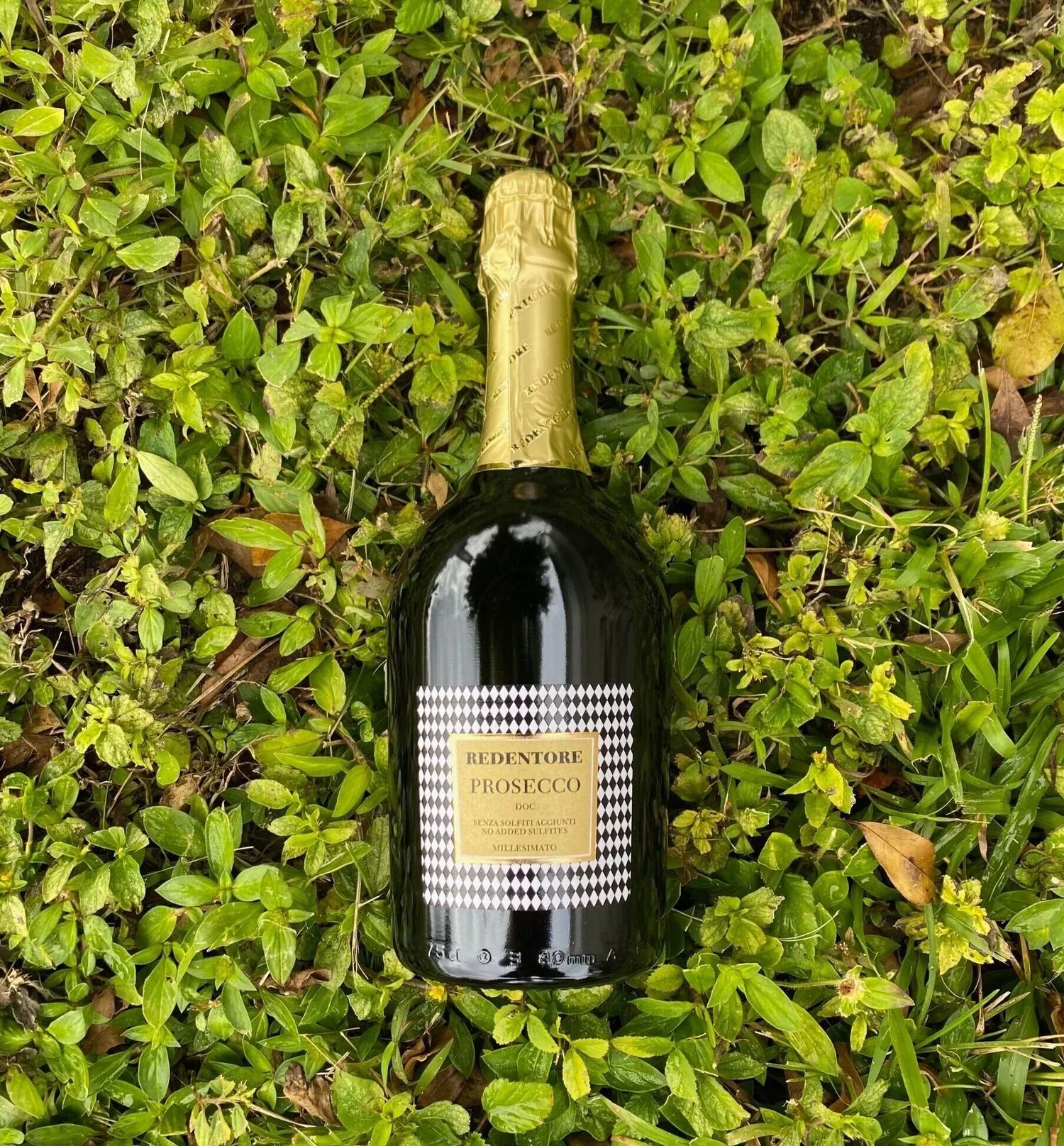
Redentore Prosecco Brut Millesimato
Redentore Prosecco Brut Millesimato
Grapes — 100% Glera
Region — Prosecco DOC, Veneto, Italy
Tasting Notes — Pale straw with a fine, tight perlage. Green apple, pear, and white blossom on the nose with a clean citrus lift. The palate has a lovely creamy mousse and real weight for Prosecco, all juicy orchard fruit and citrus over a distinct limestone minerality, finishing with ample acidity and a clean, dry snap. 11% alcohol. Textured enough to hold its own at the dinner table rather than being relegated to the aperitivo hour.
The Wine — 100% Glera from the De Stefani family's estate vineyards at 100 meters on clay soils rich in limestone, trained on double Guyot. The vines are around fifteen years old, which is the whole idea behind the Redentore label: these are the younger plantings that will one day carry the flagship De Stefani name. The wines are vinified in exactly the same way as the flagship bottlings, which makes this an unusually honest bargain.
Fermented in stainless steel with indigenous yeasts, then given its secondary fermentation by the Charmat method in tank, as is standard across Prosecco DOC. What is not standard is everything else: no fining, no filtration, and no sulfites added during vinification at all, a practice the estate has maintained since 2009. Total sulfur comes in at 40 mg/l, a fraction of what most sparkling wine carries. Production runs to about 40,000 bottles.
The name honors Venice. Redentore means redemption, and the Festa del Redentore, still held every third weekend of July, commemorates the end of the plague that devastated the city between 1575 and 1577.
Farming — Organically farmed across the estate's 40 hectares. Alessandro De Stefani uses no chemical pesticides, herbicides, or fertilizers, and goes further than avoidance: he actively works to build an environment where beneficial insects, wild animals, and soil microorganisms proliferate, and prepares his own compost on site every year.
Winemaking — Indigenous yeast fermentation in stainless steel. Charmat method secondary fermentation. No fining and no filtration. No sulfites added during vinification since 2009, with total sulfur at 40 mg/l. Residual sugar 7.5 g/l.
The Producer — The De Stefani family have been growing grapes and making wine since the second half of the 1800s, with the winery formally dating to 1866. They began in Refrontolo, a small hilly village sitting between the two great Prosecco towns of Conegliano and Valdobbiadene, and still hold their Glera vineyards in those hills. In 1971 Tiziano De Stefani moved the family down to Fossalta di Piave, on the clay soils of the old river plain, having worked out that the latitude and soil there closely matched Pomerol. The estate now runs to 40 hectares across both areas.
Alessandro De Stefani is the fourth generation and the current winemaker, and his commitment to natural production is thorough rather than partial: organic farming, indigenous yeasts across the entire range, and no added sulfur in the cellar for over fifteen years. Redentore is his second label, drawn from the younger vines, and it exists to bring the same approach to a price point where most producers quietly stop caring.
Drink It With — Prosciutto and melon, fried seafood, risotto, salty snacks of all kinds, a cheese board, or the first hour of any good evening.
Redentore Prosecco Brut Millesimato
Grapes — 100% Glera
Region — Prosecco DOC, Veneto, Italy
Tasting Notes — Pale straw with a fine, tight perlage. Green apple, pear, and white blossom on the nose with a clean citrus lift. The palate has a lovely creamy mousse and real weight for Prosecco, all juicy orchard fruit and citrus over a distinct limestone minerality, finishing with ample acidity and a clean, dry snap. 11% alcohol. Textured enough to hold its own at the dinner table rather than being relegated to the aperitivo hour.
The Wine — 100% Glera from the De Stefani family's estate vineyards at 100 meters on clay soils rich in limestone, trained on double Guyot. The vines are around fifteen years old, which is the whole idea behind the Redentore label: these are the younger plantings that will one day carry the flagship De Stefani name. The wines are vinified in exactly the same way as the flagship bottlings, which makes this an unusually honest bargain.
Fermented in stainless steel with indigenous yeasts, then given its secondary fermentation by the Charmat method in tank, as is standard across Prosecco DOC. What is not standard is everything else: no fining, no filtration, and no sulfites added during vinification at all, a practice the estate has maintained since 2009. Total sulfur comes in at 40 mg/l, a fraction of what most sparkling wine carries. Production runs to about 40,000 bottles.
The name honors Venice. Redentore means redemption, and the Festa del Redentore, still held every third weekend of July, commemorates the end of the plague that devastated the city between 1575 and 1577.
Farming — Organically farmed across the estate's 40 hectares. Alessandro De Stefani uses no chemical pesticides, herbicides, or fertilizers, and goes further than avoidance: he actively works to build an environment where beneficial insects, wild animals, and soil microorganisms proliferate, and prepares his own compost on site every year.
Winemaking — Indigenous yeast fermentation in stainless steel. Charmat method secondary fermentation. No fining and no filtration. No sulfites added during vinification since 2009, with total sulfur at 40 mg/l. Residual sugar 7.5 g/l.
The Producer — The De Stefani family have been growing grapes and making wine since the second half of the 1800s, with the winery formally dating to 1866. They began in Refrontolo, a small hilly village sitting between the two great Prosecco towns of Conegliano and Valdobbiadene, and still hold their Glera vineyards in those hills. In 1971 Tiziano De Stefani moved the family down to Fossalta di Piave, on the clay soils of the old river plain, having worked out that the latitude and soil there closely matched Pomerol. The estate now runs to 40 hectares across both areas.
Alessandro De Stefani is the fourth generation and the current winemaker, and his commitment to natural production is thorough rather than partial: organic farming, indigenous yeasts across the entire range, and no added sulfur in the cellar for over fifteen years. Redentore is his second label, drawn from the younger vines, and it exists to bring the same approach to a price point where most producers quietly stop caring.
Drink It With — Prosciutto and melon, fried seafood, risotto, salty snacks of all kinds, a cheese board, or the first hour of any good evening.