
 Image 1 of 1
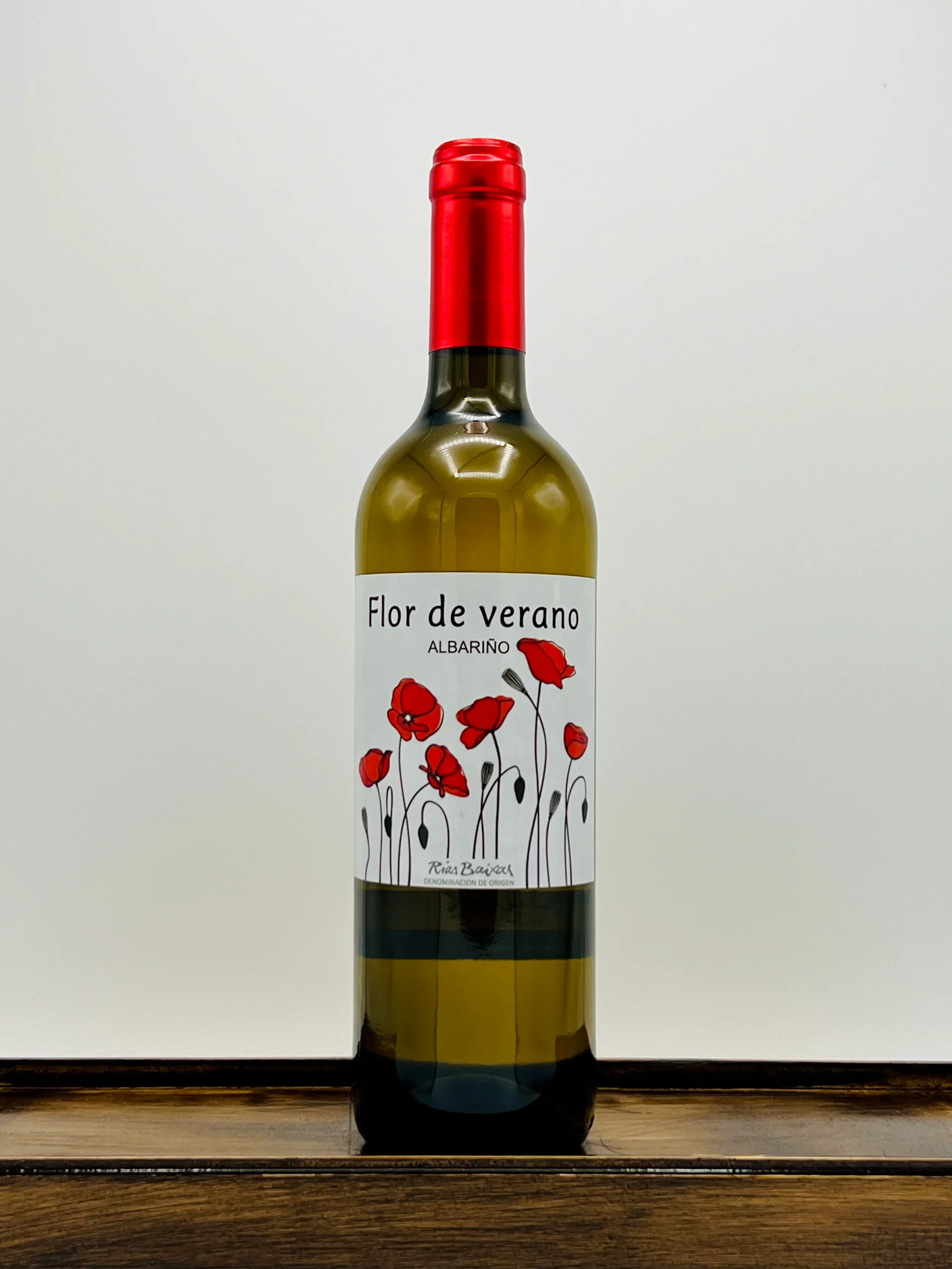
Tomada de Castro 'Flor de Verano' Albariño
Tomada de Castro 'Flor de Verano' Albariño
Grapes — 100% Albariño
Region — Val do Salnés, Rías Baixas DO, Galicia, Spain
Tasting Notes — Pale straw with a green cast. Bright citrus, green apple, and pear on the nose, lifted by white flowers and a distinct sea-spray salinity. The palate is fresh and lively with stony granite minerality running underneath, and a clean, mouthwatering acidity that carries right through the finish. Bone dry at 0.9 g/l residual sugar, 13% alcohol, and full of personality. Exactly what Albariño should be and frequently isn't.
The Wine — The estate's entry-level bottling, from the lowest-lying vineyards on the property, sitting between sea level and 20 meters. One of the parcels is roughly ten feet from the beach. That proximity is the entire character of the wine: constant moisture and sea spray off the Atlantic, granite bedrock underneath, and vines of 15 to 20 years old trained on the traditional Galician pergola system that lifts the canopy high above the damp ground.
Fermented at low temperature in stainless steel with spontaneous native yeasts, with no oak at any stage. The name means summer flower, which tells you everything about how it's meant to be drunk.
Farming — Sustainable methods across the estate's seven hectares, farmed on pergola and worked to encourage the vines to draw what they need from the granite soils and the maritime climate rather than from inputs. Not certified organic. Val do Salnés is the original and oldest sub-zone of Rías Baixas, and like most of Galicia it is farmed in tiny individual parcels rather than large contiguous blocks, which makes estate-grown fruit at this scale genuinely unusual.
Winemaking — A small amount of sulfur at harvest to prevent oxidation, then spontaneous fermentation with native yeasts alone at low temperature in stainless steel. No oak aging. Fined with bentonite and lightly filtered before bottling, with a further sulfite addition just before bottling. Total sulfur 90 mg/l. Production is around 30,000 bottles.
The Producer — The Castro family made a house wine for their own table for over a hundred years before Elisabeth Castro Nuñez and her father Carlos Castro Serantes decided in 1998 to turn that family tradition into a way of life. Elisabeth's own account of it is characteristically direct: her father simply decided the thing they had always done for themselves was worth doing properly.
They founded the adega in Val do Salnés and have farmed and bottled entirely from their own estate fruit since, which sets them apart from a great many Rías Baixas producers who buy from the region's fragmented smallholdings. Elisabeth works as winemaker alongside her father and has become one of the more visible voices for the region internationally. The house style is deliberately unadorned: no oak, native yeasts, and a determination to let the different plots of granite and sea-facing land speak for themselves.
Drink It With — Grilled sardines, razor clams, arroz caldoso, pulpo a feira, oysters, or a big plate of seafood and rice in the sunshine.
Tomada de Castro 'Flor de Verano' Albariño
Grapes — 100% Albariño
Region — Val do Salnés, Rías Baixas DO, Galicia, Spain
Tasting Notes — Pale straw with a green cast. Bright citrus, green apple, and pear on the nose, lifted by white flowers and a distinct sea-spray salinity. The palate is fresh and lively with stony granite minerality running underneath, and a clean, mouthwatering acidity that carries right through the finish. Bone dry at 0.9 g/l residual sugar, 13% alcohol, and full of personality. Exactly what Albariño should be and frequently isn't.
The Wine — The estate's entry-level bottling, from the lowest-lying vineyards on the property, sitting between sea level and 20 meters. One of the parcels is roughly ten feet from the beach. That proximity is the entire character of the wine: constant moisture and sea spray off the Atlantic, granite bedrock underneath, and vines of 15 to 20 years old trained on the traditional Galician pergola system that lifts the canopy high above the damp ground.
Fermented at low temperature in stainless steel with spontaneous native yeasts, with no oak at any stage. The name means summer flower, which tells you everything about how it's meant to be drunk.
Farming — Sustainable methods across the estate's seven hectares, farmed on pergola and worked to encourage the vines to draw what they need from the granite soils and the maritime climate rather than from inputs. Not certified organic. Val do Salnés is the original and oldest sub-zone of Rías Baixas, and like most of Galicia it is farmed in tiny individual parcels rather than large contiguous blocks, which makes estate-grown fruit at this scale genuinely unusual.
Winemaking — A small amount of sulfur at harvest to prevent oxidation, then spontaneous fermentation with native yeasts alone at low temperature in stainless steel. No oak aging. Fined with bentonite and lightly filtered before bottling, with a further sulfite addition just before bottling. Total sulfur 90 mg/l. Production is around 30,000 bottles.
The Producer — The Castro family made a house wine for their own table for over a hundred years before Elisabeth Castro Nuñez and her father Carlos Castro Serantes decided in 1998 to turn that family tradition into a way of life. Elisabeth's own account of it is characteristically direct: her father simply decided the thing they had always done for themselves was worth doing properly.
They founded the adega in Val do Salnés and have farmed and bottled entirely from their own estate fruit since, which sets them apart from a great many Rías Baixas producers who buy from the region's fragmented smallholdings. Elisabeth works as winemaker alongside her father and has become one of the more visible voices for the region internationally. The house style is deliberately unadorned: no oak, native yeasts, and a determination to let the different plots of granite and sea-facing land speak for themselves.
Drink It With — Grilled sardines, razor clams, arroz caldoso, pulpo a feira, oysters, or a big plate of seafood and rice in the sunshine.